Le Morne kitesurfing: the complete guide
Three spots, one mountain, six months of trade winds. The honest read on where to ride, where to learn, and where to stay if Le Morne is the reason you're booking a Mauritius trip.
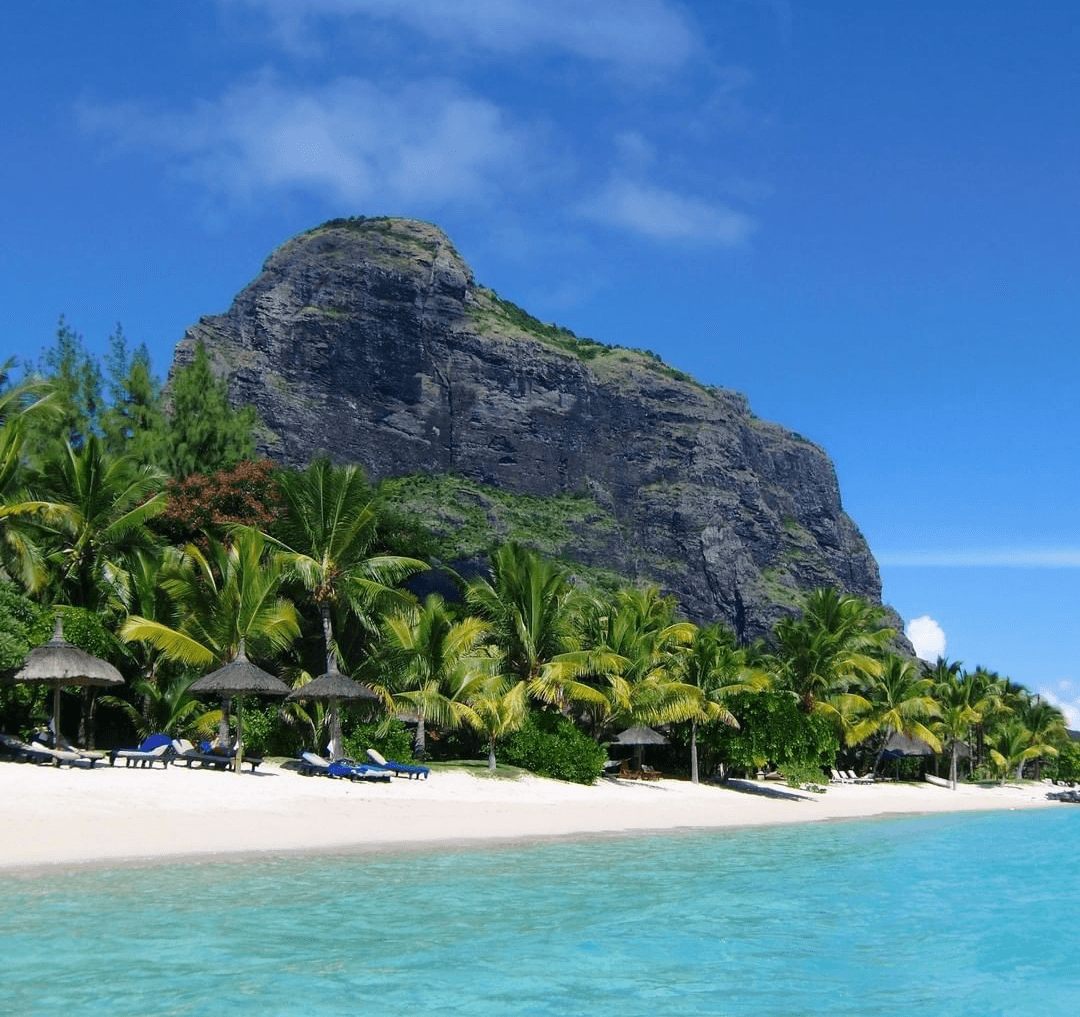
Le Morne is one of the spots kitesurfers fly halfway around the world for, and the reasons are unromantic when you list them. South-east trade winds blow at a working 18 to 25 knots from May to October, peaking through June, July, and August. The peninsula offers three distinct riding zones inside a single bay: a shallow flat lagoon for beginners and freestylers, the One Eye reef break for the very advanced, and a downwind run from L'Embouchure to La Prairie. The mountain in every photograph is the 556-metre Le Morne Brabant, a UNESCO World Heritage Site for its role in the Maroon escape from slavery, and it sits in the frame whether you want it there or not.
Friday does not operate residences in Le Morne directly. We operate on the west coast, with a cluster in Flic en Flac forty-five minutes north, and that proximity is what makes a dedicated kite trip from one of our residences work in practice. The drive south is short, the road follows the coast, and the wind builds as the morning warms. What follows is the guide we'd give a friend who'd asked us where to ride, where to learn, and what to expect.
The three spots inside Le Morne bay. The bay reads as one piece of water from the air, but on the ground it splits into three distinct zones, each with its own learning curve and its own crowd.
The Kite Lagoon. The shallow, flat-water lagoon directly off the peninsula is where most riders spend most of their week, and where every school runs its beginner programme. Knee-deep at the launch, waist-deep through most of the working area, sand bottom rather than coral, no current to speak of. It is genuinely one of the most forgiving learning spots in the world: a shallow flat lagoon with steady side-shore wind is the closest thing kitesurfing offers to a kiddie pool. Two main launch areas serve it: the Riu Resort end (where ION Club has its fixed base, the only on-spot school structure) and the southern end near the public beach. The lagoon gets crowded between 11am and 3pm in peak season, when every school runs lessons because the wind is steadiest. Ride the morning if you can; the wind picks up around 10am, and the first hour is the cleanest you'll get.
One Eye, the reef break. Roughly 500 metres offshore, on the outside of the reef that forms the bay, a left-handed wave breaks over a shallow coral shelf when the swell and tide line up. It's named after the single notch in the Le Morne mountain that aligns with the take-off zone when you're sitting on the line-up. It is a serious wave: shallow, fast, powerful, and there is no rescue boat in the lineup. The reef is sharp; the current sets toward the channel and out to sea; the wind over the reef is offshore from a kiter's perspective, which makes self-rescue a real concern. Industry consensus is consistent: One Eye is for experienced wave riders with their own gear who have surfed reef passes before. We will not put a guest on it through Friday's surf operator unless they have a track record we can verify. Tidal window matters: high tide gives the cleanest face, low tide exposes the coral.
The downwinder, L'Embouchure to La Prairie. A guided run of roughly six to eight kilometres depending on wind angle, starting at the entrance of the bay and finishing on the beach at La Prairie. Every school offers it for intermediate riders who can sail upwind in open water and self-rescue if needed. The run is beautiful: you ride past the full peninsula, the swell builds slightly outside the bay before the lagoon flattens it again at La Prairie, and a chase boat or school van handles the return. This is the day most riders remember from a Mauritius trip, more than the lagoon laps.
The wind, the season, the calendar. The dominant wind on Mauritius is the south-east trade. Le Morne's peninsula points west into it, which means the bay catches a clean side-shore on the lagoon and a side-offshore over the reef. The trades are most reliable during the southern winter, May to October, and they peak from June through August.
Peak, May to October. Working-hour wind (10am to 5pm) sits at 18 to 25 knots, with regular 28-to-30-knot afternoons in June and July. Days under 12 knots in this window are unusual. We expect to ride five days out of seven on a peak-season week, and most riders do better.
Shoulders, April and November. Wind still works but less consistently: 12 to 18 knots most days, occasional flat patches. April's first half is wet-season tail; November's second half opens the cyclone watch. Both work for a patient intermediate, but a single-week beginner package is better booked in peak season.
Off-season, December to March. Hit or miss. Some days hold 15 knots; many don't. The lagoon water is at its warmest (27°C in February) and the rest of the island is alive in a way it isn't in winter, but if kitesurfing is the reason for the trip, off-season is not the trip. January and February sit inside cyclone watch (Mauritius Meteorological Services runs the season 15 November to 15 May), and the variance is real.
Forecasting day-to-day. Windguru's Le Morne page (windguru.cz/130) is the canonical forecast among riders on the spot; Windy.com gives the wider picture, useful for spotting a system three or four days out. The local schools read the same charts and adjust call times accordingly; if a school's WhatsApp says 'late start, no wind till 11', they're not stalling, they're reading what you'd read.
The schools we'd send people to, and what each is best for. Le Morne has more kite schools per kilometre of beach than almost anywhere else in the Indian Ocean. The four we have a working view on are the ones below; there are others (Son of Kite, Le Morne Kite School, Pryde Club, Mauritius Kitesurfing School) that we don't have first-hand experience of recommending, and we won't pretend otherwise.
ION Club Le Morne. The international chain, with a fixed base at the Riu Resort end of the lagoon and a second presence at the JW Marriott / St Regis side. IKO and VDWS instructors, structured progression curriculum, groups capped at two students per instructor, rescue boat and jet-ski support, and the deepest gear pool on the spot. Best for: committed multi-week learners, families happy to slot into a fixed programme, and anyone who wants to switch between kite, wing, and windsurf in a single week. The downside is that you're in the system: fixed call times, gear comes from the chain, price reflects the operation.
Riders Mauritius. The family-run option on the lagoon, IKO-certified lessons, and the school we tend to point first-time learners at when they want warmth as well as structure. Equipment rental is solid, the instructor team is small and consistent (you'll learn from the same person across your week), and the price sits a notch below the chains. Best for: beginners and early intermediates who'd rather have one instructor for five days than the rotation of a bigger operation.
Yoaneye Kite School. Smaller still, run by Yoann (who teaches the wave himself), and the one we'd send an intermediate to for wave coaching. This is where you go if you want someone who'll sit with you on the reef and tell you honestly what your kite was doing in the gust before the wipe-out. General lessons are good; the wave coaching is the reason. Best for: intermediates graduating from lagoon laps to reef days, and budget-conscious riders happy with a small operation.
C Beyond Kite School. The semi-private specialist, with smaller group sizes than the chains and a bias toward one-on-one coaching. Good for advanced wave work, good for compressing a learning curve. Best for: experienced riders looking to break through a plateau, and time-pressed travellers who want one-on-one efficiency.
A bias to admit. If you have your own kite, board, and harness, bring them. A week of full rental on the spot runs roughly three to five hundred euros, and rental gear is rental gear. Air France, Air Mauritius, and Emirates charge between one and three hundred euros for a kite bag depending on size and class. If you're a regular kiter, the maths favours bringing your own. If you're learning, take the rental and don't think about it.
Where to stay, honestly. Friday does not operate residences in Le Morne. We operate on the west coast with a cluster in Flic en Flac, which is forty-five minutes north of the peninsula by car, and that drive is the question worth answering.
Flic en Flac as a kite base. The configuration we'd recommend for most kite trips. A Flic en Flac residence puts you in a town with grocery, restaurants, a working beach for kid-friendly afternoons, and Friday's full operational support; the drive to Le Morne is a sunny coastal road, forty to fifty minutes depending on traffic. You leave at 8.30am, you're on the beach by 9.30am, you ride through the wind window, and you're back in Flic en Flac for a late lunch at La Madrague Tamarin. For a partner or family who aren't kiting, Flic en Flac has the calm lagoon, the pool, and the town that Le Morne itself does not. See Friday's west-coast residences.
Le Morne hotels. If the drive feels too long, the on-spot option is one of the resort hotels: LUX Le Morne, Paradis Beachcomber, Heritage Le Morne, Riu Le Morne. Rates run from roughly three hundred to twelve hundred euros a night depending on season and category. You're on the lagoon, you can roll out of bed onto the kite. The trade-off is the resort experience: pricing reflects a captive market, the food works for hotel guests rather than locals, the energy is hotel rather than town. For a one-week dedicated kite trip with no non-kiting partners, this is the simpler answer. For everything else, we'd point you to Flic en Flac.
The gear question. Le Morne riders mostly use a 9-metre kite (the most-used size given the working wind range), a 12 for the lighter shoulder days, and a 6 for the rare 30-knot afternoon in July. A twin-tip covers the lagoon and the downwinder; a directional surf-style board is what you want for One Eye if you're cleared to ride it. Harness, helmet (worth wearing on the reef, optional on the lagoon), rashguard or wetsuit-top for sun, reef booties for the reef. Rental on the spot runs roughly sixty to one hundred euros a day for a full setup. As mentioned, if you ride enough to own your gear, the airline fee usually beats the rental bill.
A one-week kite-trip itinerary from a Flic en Flac base.
Arrival, Saturday. Plaisance airport, transfer to Flic en Flac (sixty to ninety minutes depending on flight), settle in, gear check if you've brought your own, dinner at Tonton's. Sleep.
Sunday, day one. Late breakfast at the residence, drive to Le Morne for an afternoon lagoon session to get a feel for the spot. If you've booked through ION or Riders Mauritius, this is your first lesson. Back in Flic en Flac for sunset.
Monday to Friday, days two to six. Five working kite days. Leave Flic en Flac at 8.30am, arrive at the lagoon by 9.30am, kite the wind window from roughly 10am to 3pm with a break, drive back for a 4pm late lunch at La Madrague in Tamarin (the deck table), recover, dinner, sleep early. Build a single downwinder day into the middle of the week, and a single reef-coaching session if you're at that level. Take one day off if your forearms tell you to.
Saturday, departure. Morning session on the lagoon if your flight is afternoon-or-later, breakfast at Domino Café in Flic en Flac, transfer to airport.
For families with a non-kiting partner or children. Flic en Flac is where this configuration works. The lagoon there is calm and shallow enough for kids past the basic age, every residence we operate has a pool, and La Preneuse and Wolmar beaches are walking distance from most of the cluster. The kite-parent does the morning at Le Morne; the family does a slow morning at the residence; everyone meets at Tonton's or La Madrague for a 3pm late lunch and an afternoon together. This is the configuration our most-returning kite guests use, year after year. Le Morne on its own doesn't have the town, the beaches, or the residence-with-pool options for the non-kiter; the trade-off of the forty-five-minute drive is what makes the family trip viable.
A note on surfing Tamarin Bay. If you're a surfer rather than a kiter, or a kiter who also surfs, Tamarin Bay is the local spot north of Le Morne. Conditions and access vary, the lineup is local, and the reef requires honest skill assessment. Read our broader things-to-do guide, then verify current conditions and lessons directly with a recognised local school.
Closing read. Le Morne is one of the Indian Ocean's recognised kite destinations, with different zones for different skill levels. Bring your own gear if appropriate, or book lessons directly with a recognised school after checking certification, insurance, rescue cover, conditions, and cancellation terms. See our west-coast residences if you want a Friday base near the south-west; the lesson remains a separate provider transaction.