Mauritius airport transfer: the practical guide
From SSR International to Flic en Flac, Grand Baie, Bel Ombre, or Mahebourg. Private transfers, hotel transfers, the airport taxi rank, ride-hailing, and car hire: what each is good for and what to verify before booking.
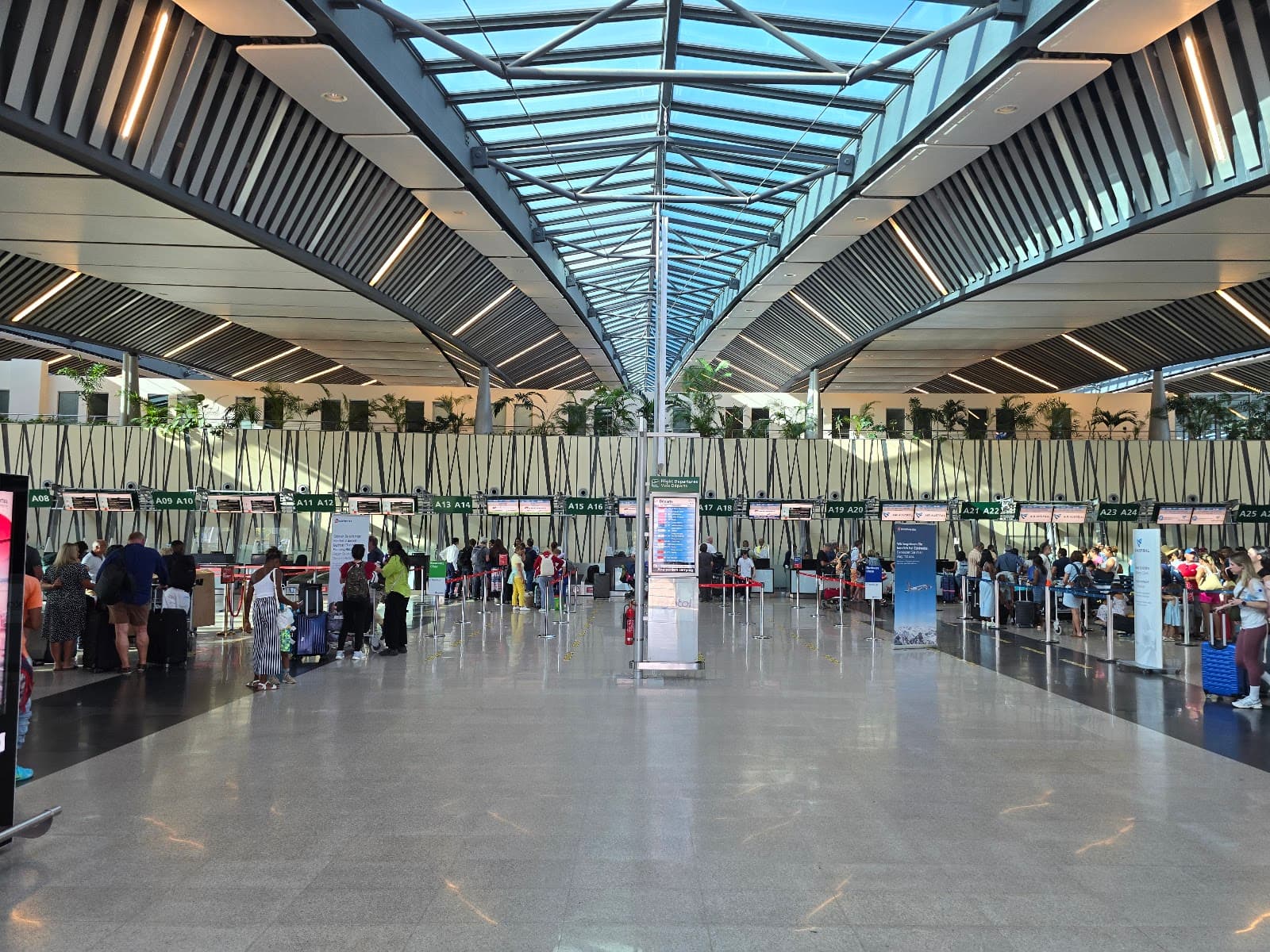
Sir Seewoosagur Ramgoolam International Airport, SSR for short and Plaisance for the older taxi drivers, sits in the south-east corner of the island. That matters because nothing on Mauritius is more than ninety minutes from it by car, but most of our guests are headed to the west or the north, and the drive is a real chunk of the arrival day. From the airport curb: about 70 minutes to Flic en Flac, 80 minutes to Grand Baie, 30 minutes to Bel Ombre, 15 minutes to Mahebourg. Add ten in the afternoon traffic around Curepipe.
There are three usable ways to get from SSR to your residence: a pre-booked private transfer, the airport taxi rank, or an available licensed ride-hailing service. Hotel-arranged transfers are a fourth if you booked a resort. Car hire from the arrivals counters is a fifth, and it can be the right answer for longer stays. We'll go through the tradeoffs and historical price ranges, then the practical choice at the end. Verify live availability and prices with the provider before relying on them.
A pre-booked private transfer. Book directly with a licensed transfer operator before travelling. Ask the operator to confirm the total price, passenger and luggage capacity, child-seat availability, meeting point, flight-delay policy, cancellation terms, and payment method in writing. Historic indicative pricing has been around €45 for a sedan to Flic en Flac and €55 to Grand Baie, with vans and minibuses costing more, but live prices and terms must be checked with the operator.
A proper pre-book should include flight tracking and a clear arrivals meeting point. Share the residence address and arrival time directly with the operator, but do not send gate or lockbox codes until the driver actually needs them. Transfer bookings and payments are separate from a Friday residence booking, and Friday does not add them to the residence invoice.
Hotel-arranged transfers. The resort default. If you've booked a Mauritius hotel rather than a residence, the resort may offer to organise the transfer for you. Historical prices have often been €40 to €60 for a sedan-equivalent and more for a larger vehicle. Ask the hotel to confirm the current total, meeting point, delay policy, vehicle size, child seats, and cancellation terms before travel.
The airport taxi rank. Outside the arrivals hall, well-signed and regulated. Confirm the total fare before departure, including any luggage or card surcharge. Cash in Mauritian rupees is widely used and card acceptance is not guaranteed. The rank is useful when you have not pre-booked, but the driver will not necessarily know a residence's access details, so keep the address and arrival instructions available.
Ride-hailing apps. Coverage, licensing, pickup zones, driver supply, and prices can change. Check which licensed service is operating at SSR when you travel, use the pickup point shown in the app, and confirm that your mobile data works before depending on it. This can suit solo or flexible arrivals, but it is less predictable late at night or during disruption than a confirmed private transfer.
Car hire from the airport. Sixt, Europcar, Hertz, ABC, and a few local agencies have counters in the arrivals hall, all to the left as you exit customs. Rates start around €25 a day for a small car and run to €60 a day for a 4x4 or a seven-seater. The walk from the customs door to behind the wheel is about thirty minutes once you factor the paperwork, insurance up-sell, and the walk to the car park. Best for: stays of a week or more, families wanting full flexibility, anyone planning to do the south-west loop or the east coast under their own steam. Pre-book online from home before you land — the walk-up rate at the airport runs roughly €10 a day more than the same agency's online quote. We have a longer driving piece in how to get around Mauritius covering left-hand-drive, fuel, and the roundabouts.
The return trip. You can ask the same operator to quote the return when you book the arrival, but confirm the pickup time and price separately. Check your airline's current guidance and allow enough time for traffic, baggage drop, security, and border control. Flight schedules and check-in rules change, so the airline remains the source of truth.
SSR practical fact sheet, for first-timers. What the arrivals hall actually has.
Currency. Mauritian rupee (Rs). FX counters inside arrivals, three of them, all with similar rates; ATMs in the public area after you clear customs. EUR cash is widely accepted at the airport and at most taxis, ride-hailing, and duty-free outlets, with change often given in rupees. Cards are accepted at duty-free, at most taxis with a working machine, and at all ride-hailing.
SIM cards. Emtel and MT (Mauritius Telecom) both have booths in the arrivals hall, signed in English and French. Rs 50 for the SIM itself, then Rs 500 to Rs 800 for a month's data plan with 20GB or more — roughly €10 to €16. Bring your passport for the SIM activation. eSIM is available too if your phone supports it. Most Friday guests on a week-long stay take a physical SIM for the on-island number; tethering off it works fine for the laptops.
Luggage carts. Free. They're stacked between the baggage carousels and the customs exit, no coin, no deposit.
Arrival wait time. Plan 30 to 45 minutes from wheels-down to taxi: passport control, baggage carousel, customs. Long-haul flights from Europe and the Gulf often arrive in clusters, and the passport queue can run 25 minutes alone on the bad days. The Mauritian immigration officers are friendly but methodical.
Customs. Red line and green line, the usual two-channel system. Mauritius is fairly strict on agricultural imports: no fresh fruit, no fresh meat, no fresh dairy, no plants or seeds. Duty-free allowances for liquor (two litres of wine plus one litre of spirits per adult) and tobacco (200 cigarettes) are standard. Customs declarations above €5,000 in cash are required.
Power and plugs. Type C (European 2-pin) and Type G (UK 3-pin), 230V 50Hz. Most European devices plug in without an adapter; UK and Singapore-spec devices also work without an adapter. US two-flat-prong plugs do need a small converter.
Time zone. GMT+4, year-round. No daylight saving on Mauritius, which means the gap to Europe shifts an hour twice a year — in European summer it's a two-hour gap to Paris, in European winter it's three.
What we'd actually choose. A pre-booked licensed operator is usually the lowest-friction option for a late arrival or a family with substantial luggage. The airport taxi rank works for flexible arrivals, ride-hailing may suit travellers with working mobile data, and car hire makes more sense when you want a vehicle for most of the stay. Book and pay the provider directly, verify live terms before relying on them, and keep the transfer separate from your residence booking. Browse the residences here if you're still deciding where to stay.