Where to stay in Mauritius: an honest guide by coast
Two coasts, three property types, a handful of microclimates. The answer to where you should sleep depends on the trip you're actually taking. Here is how we'd talk you through it.
The question we get more than any other, from couples writing six months out and from groups writing two weeks out, is some version of the same thing: where should we stay. Sometimes it arrives as 'what's the best area in Mauritius', sometimes as 'is the north or the west better for a honeymoon', sometimes as 'we have three couples and a baby, where do we go'. The honest answer, the one we give over a fifteen-minute call before we send any links, is that it depends. It depends on whether you are coming for the lagoon or for the dining, whether you have a toddler or a teenager, whether you are travelling as two or as eight, and whether your idea of a good evening involves a long table on a deck or a quiet kitchen and a chef. The good news is the dependencies sort themselves quickly once you say what you actually want.
Before we go through the coasts, here is what we look for when we judge whether a stay is going to work. Lagoon character first. Some bays on this island are flat year-round and some are choppy from May to October. The difference shows up at every meal you eat in your swimsuit. Drive time to dinner second. A residence twelve minutes from food at 8pm is a different trip from one that is forty-five minutes from food at 8pm, especially when nobody wants to drive after a swim. Daylight on the property third. The angle of the sun matters more than people expect, particularly if you have a baby napping or if you want to read on a terrace in the afternoon. And the team fourth. Whether the local team can get to you in twenty minutes when something needs attention. The four of those, in order, are what make the difference between a postcard week and a remembered one, and they are what we'll keep coming back to.
The two coasts Friday operates on. Friday runs residences on the west coast (Flic en Flac and a little to the south) and on the north coast (Grand Baie and its immediate villages). Two coasts, not four. We do not operate on the east, we do not operate on the south, and we do not currently operate in Tamarin even though it is a fifteen-minute drive from our Flic en Flac core. The reason is partly geography (the east is windier and the south is further from everything) and partly operational (we keep the team within a thirty-minute radius so a maintenance call gets a real answer the same day). Both coasts are leeward, both have flat lagoons most of the year, and they are different enough from each other that the choice between them is the first real choice you'll make.
Flic en Flac sits on the west, faces the open Indian Ocean across a protected lagoon, and gets the sunsets. Grand Baie sits on the north, faces a network of small bays and the islet-studded horizon toward Coin de Mire, and gets the dining. Drive time from the airport at Plaisance to Flic en Flac is around seventy minutes; to Grand Baie, around eighty. Drive time between the two is about ninety minutes by motorway, fifty if you go through the centre with no traffic. They feel like different islands once you are in them.
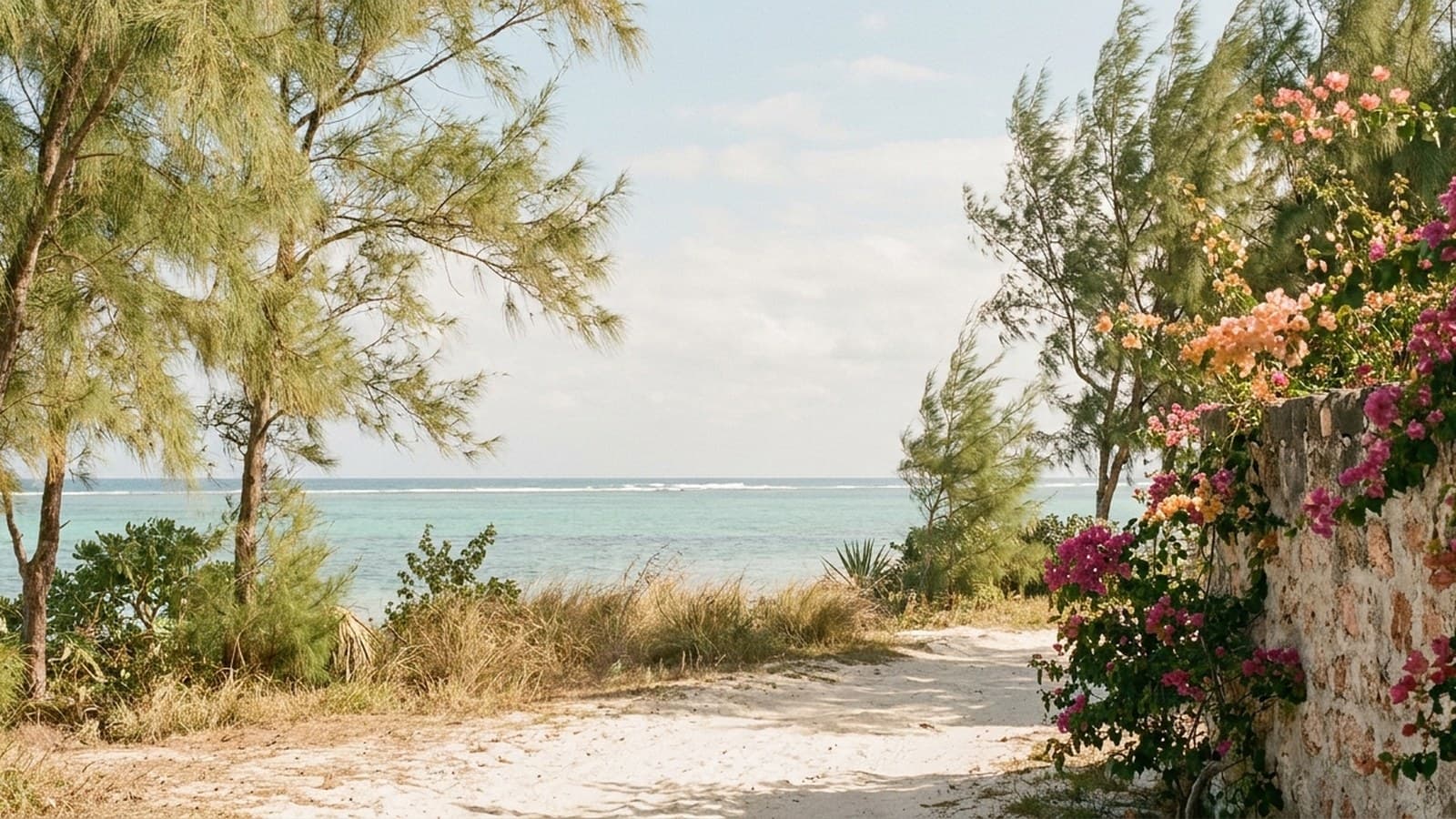
Flic en Flac, the west coast. Flic en Flac is a long strip of village running parallel to one of the longest white-sand beaches in Mauritius, with a protected lagoon that runs about two hundred metres out before it hits the reef. The water inside the lagoon is glass most days, the colour shifts from turquoise to deep blue along the same patch of sand depending on the cloud, and the bottom is sandy with patches of seagrass and the occasional coral head. There is almost nothing in the lagoon that will hurt you. Children swim here who would not swim on most of the east coast. We have couples who book Flic en Flac for the second honeymoon and end up booking a return for their kids three years later, because the swim works for both.
The sunset on this coast is the postcard. Big Willy's, on the beach. is the obvious one to walk to for a cold Phoenix at six; the deck at La Preneuse, fifteen minutes south, is the local one. The fishing pirogues come back in around five if the wind has been right, and the silhouettes against the apricot sky are the photograph every brochure tries to take. The west has the only proper west-facing horizon on the island, and the sunsets feel earned because the rest of the day has been calm. There is no sundowner on Mauritius that competes with one on this lagoon between mid-October and mid-December.
Dining in Flic en Flac is small but specific. Tonton's does an octopus curry that you should order on your first night, in the back courtyard, cash only. La Madrague is in Tamarin ten minutes south, Lebanese-Mauritian, with the only deck on the island that looks down onto a working fishing bay. Domino Café is the breakfast we send guests to for the dholl puri, the espresso, and the morning that does not feel like a hotel buffet. La Preneuse has a row of small grills along the road that locals fill on weekends and that are worth driving the eight minutes south for. We go deeper on this in our standalone guide, eating in Flic en Flac, but the short answer is that the food map is small, particular, and entirely satisfying for a week.
The honest downside of Flic en Flac is that the dining variety is narrower than Grand Baie's. If you are a couple who likes the idea of trying a different cuisine each night, the west has the same five excellent places for the week and a handful of pleasant fallbacks. We think this is a feature; some guests want the opposite, and we tell them so. There is also less foot-traffic nightlife: a couple of bars, a beach club, no club scene. Couples and families love this; people travelling specifically to go out at midnight do not. The west closes by ten on most weeknights.
The microclimate detail nobody mentions. Flic en Flac sits in the lee of the central plateau. The trade winds that buffet the east coast and the south get shadowed by the mountains and arrive at the lagoon as a soft afternoon breeze, usually between two and five o'clock, that flattens out the heat of the day without ruining the swim. The afternoon read on a terrace is reliably comfortable from May through November, and the rain that does fall passes through in twenty minutes and leaves the lagoon clearer. It is the most boring sentence in the world to write, but the weather here is reliable, and reliability is the basis of a good week.
Grand Baie, the north coast. Grand Baie is busier than Flic en Flac, busier than most of the island, and busier than it was even three years ago. The trade-off is the dining and the daylight hours. The strip around the bay itself has around forty restaurants within a fifteen-minute walk of any of our residences there, ranging from local sushi at La Sirène to long-form Italian at Sapore, the catch-of-the-day at Vagabond, and the late-night grilled fish at the small places along the seafront. Mall de la Croisette, ten minutes inland, is the proper grocery and pharmacy stop, and it has a clean cinema, a couple of decent cafés, and the post office. The volume of choice is genuinely useful if you are travelling for a fortnight or with teenagers.
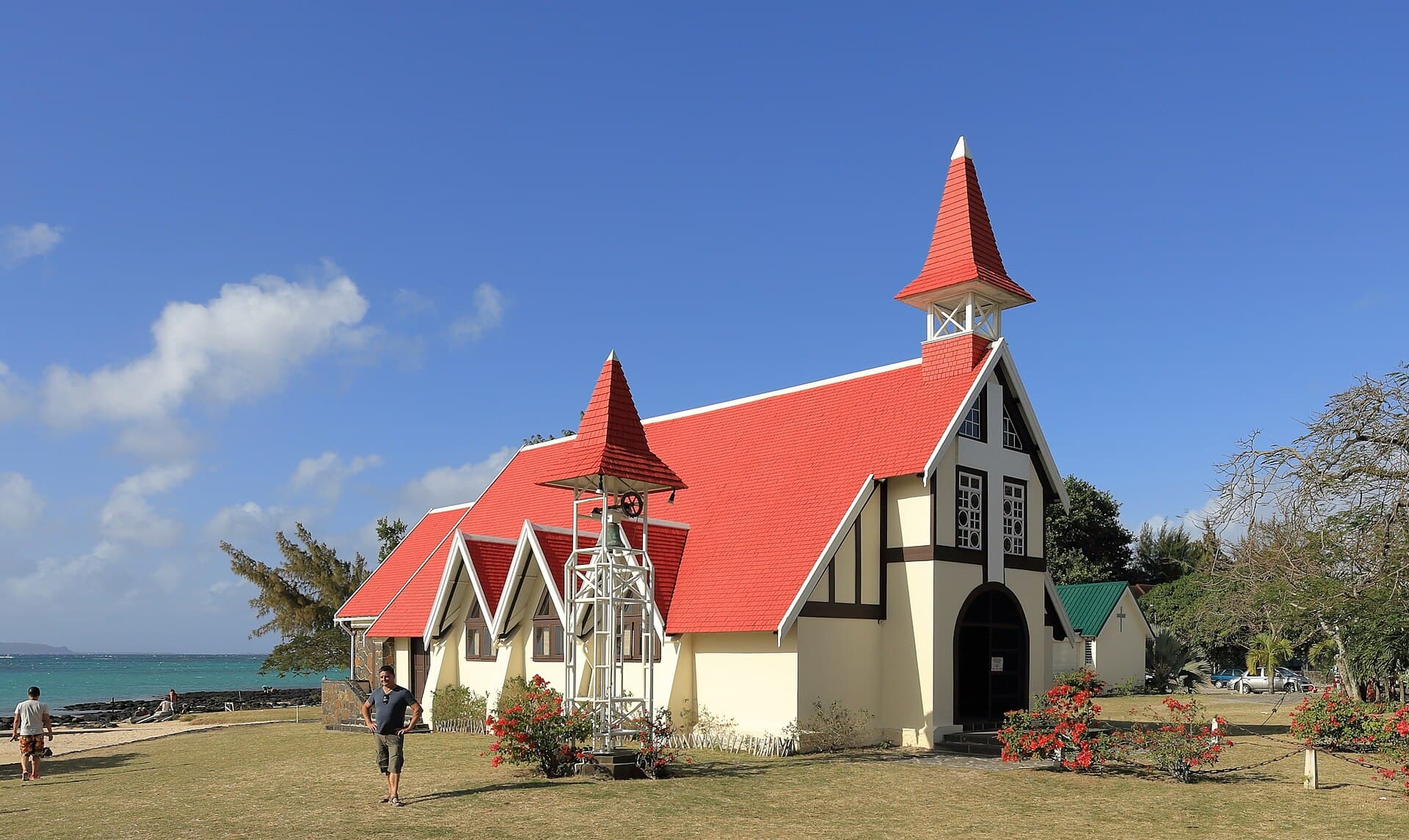
The bays around Grand Baie are smaller and more enclosed than the Flic en Flac lagoon, and the water sits in pockets rather than along a continuous beach. Pereybère, fifteen minutes north of Grand Baie centre, is the swim beach: small, sheltered, family-friendly, with shallow water and a row of food shacks. Mont Choisy, ten minutes south, is a longer beach with casuarina shade and the morning joggers. Trou aux Biches, twenty minutes south, is the most photogenic and the calmest. Cap Malheureux, the northern tip, has the red-roofed church (Notre-Dame Auxiliatrice) that appears on every postcard, the offshore view of Coin de Mire, and a working fishing village with a couple of small Creole restaurants worth driving for.
The drive to Cap Malheureux is the one we recommend on the first morning, before breakfast. The light is gentle, the church is empty, and the espresso at the small bakery on the corner is twice as good as the one at the chain in the mall. For families with teens, Grand Baie is the obvious pick: there is enough to do that they will not be bored in the second week, there are watersports operators on the beach, and the village is walkable at night without a car. The northern coast also has the volcano (Trou aux Cerfs, in Curepipe), the botanical garden at Pamplemousses, and the cluster of small inland villages where you can rent bikes for an afternoon.
The honest downside of Grand Baie. It is louder, busier, and less private. The road that runs along the bay carries scooter traffic until late, the catamaran day-tour boats leave from the public jetty every morning around eight and the noise of the dock carries, and the beach in front of the central village is not a swim beach (use Pereybère). The volume of choice in dining is paid for in volume of people, and there are evenings in high season when finding a quiet table requires a 4pm phone call. Some guests love the buzz; others find that it puts them on the wrong frequency for a holiday. We ask early which one you are.
Where Friday does not operate, and why. The east coast (Belle Mare, Trou d'Eau Douce, Palmar) is the postcard coast for the international hotel groups, and the four-mile stretch of beach at Belle Mare is genuinely beautiful. The reason we do not have residences there is partly the wind. The south-easterly trade wind hits the east coast head-on from May to October and ruffles the lagoon in a way that surprises guests who saw the Instagram photo. Beautiful afternoons on the east in those months are real, but they are the exception. The dining options outside the resorts are sparser than the west or the north, and you will end up eating at your hotel more nights than you planned to. If your dream is a five-star resort with a kids' club and a spa and you want to be on the east, book a Beachcomber property or a One&Only; they do that very well and we will tell you which to pick.
The south. Bel Ombre, Le Morne, and the area around the Black River bay. Beautiful, dramatic, and a real fifty-minute drive from Flic en Flac and ninety from Grand Baie. We do not operate there because the team radius would not hold; if you booked a property in Bel Ombre with us, a maintenance issue would be a two-hour round trip for our handyman, and that turns a same-day fix into a next-day one. We send guests south for the day, often: the catamaran trips leave from La Gaulette, the kitesurf rigs are at Le Morne, the Black River Gorges hike starts forty minutes inland. Day-trip the south, sleep on the west. Or, if you want to stay south, the LUX* Le Morne and the Heritage Resorts at Bel Ombre are good five-star answers, and we will tell you which suits which trip.
Tamarin. Tamarin sits in between, twelve minutes south of Flic en Flac on the way to Le Morne. It has its own surf beach, the only proper one on the west, and a small bohemian-ish village around it. We do not operate there yet, mostly because the residences we love in Tamarin are already family homes that are not on the rental market. If you specifically want Tamarin, we will tell you so and recommend a local boutique like Cape Bay Suites; otherwise, stay in Flic en Flac and drive to Tamarin Bay for surfing or to La Madrague for dinner. The road runs along the salt pans and the apricot light at six is the bit of the drive nobody mentions.
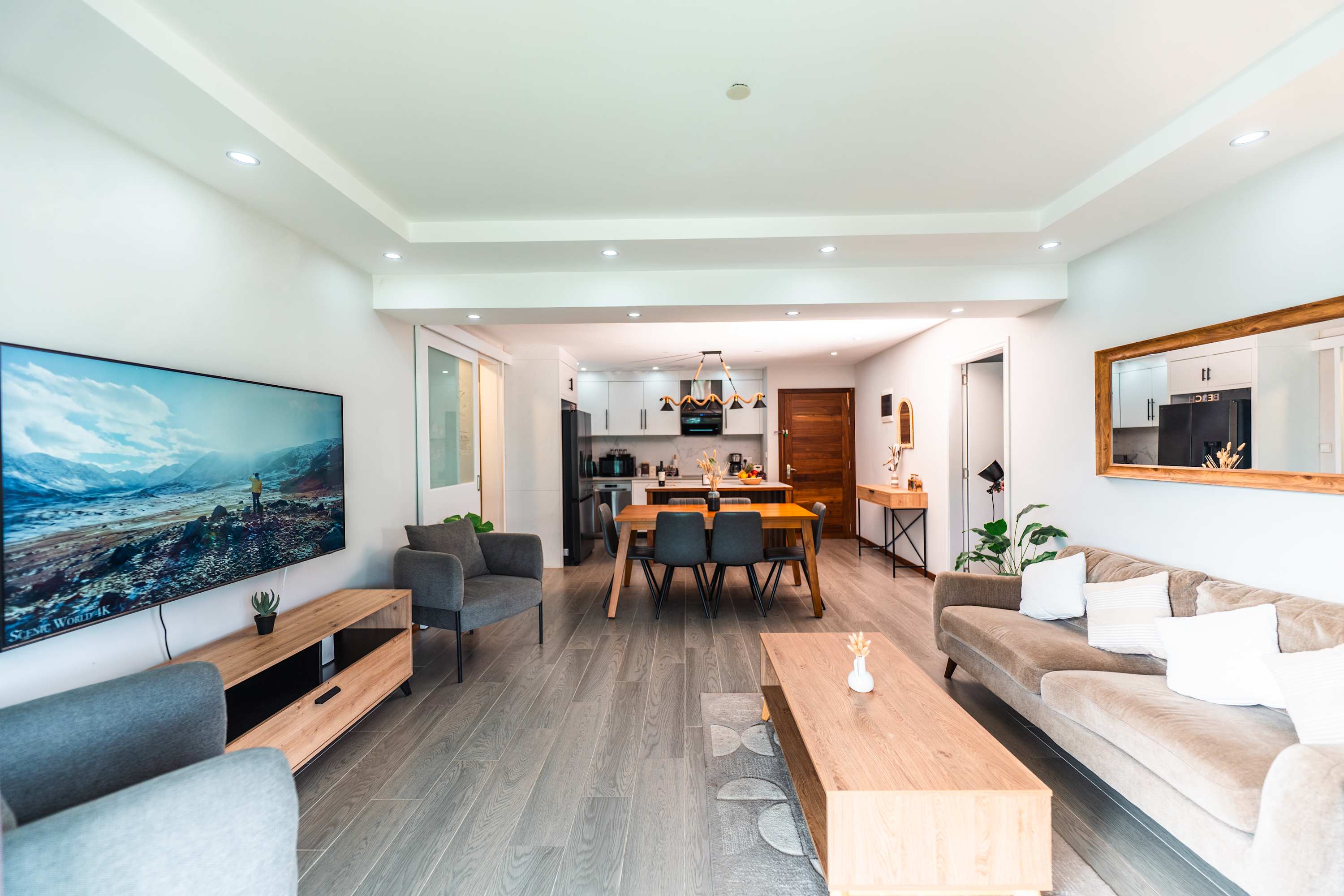
Villa, apartment, or penthouse. Within the two coasts, the portfolio splits into three property types, and the question of which one is right for you is independent from the question of which coast. We will go through each. The apartment is the most common booking on Friday. Two bedrooms, a small living room, a kitchen that works for two people who cook, a balcony, a shared pool in the residence's grounds. Apartments suit couples, small families, and remote-work couples on two-week stays. They are the right answer if you are planning to be out of the residence most of the day and you want a comfortable base to come back to in the evening. They run from about €50 a night in the off-season to around €90 in high season for the better ones, and they are the residences we recommend to first-time visitors.
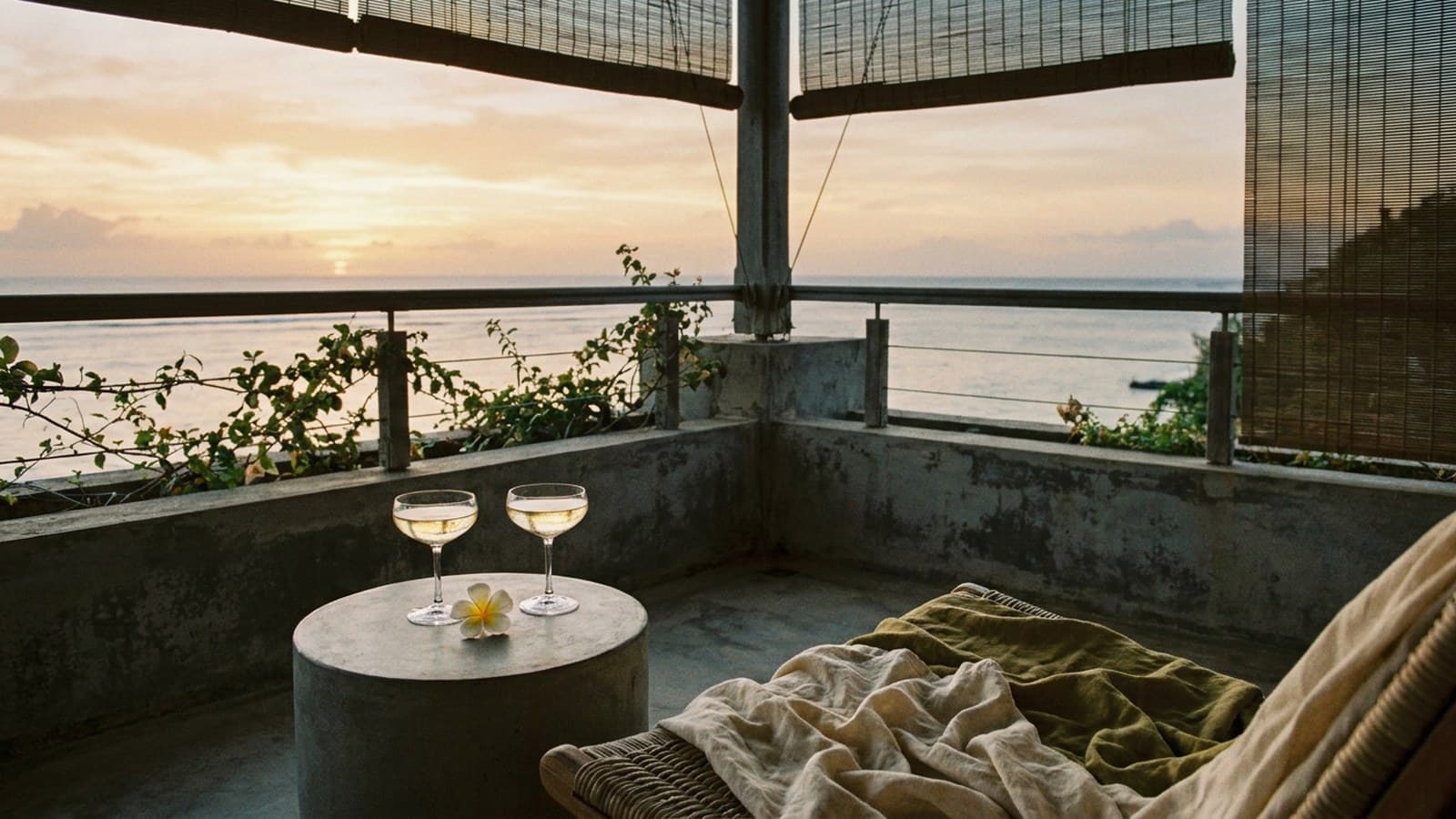
The penthouse is the top floor of the same residence buildings, with a private rooftop, often a small plunge pool, and a sea view if it is positioned right. The sea view penthouse with pool in Flic en Flac is the canonical one. The penthouse is the right answer for couples who want a sunset view, an outdoor dinner at home, and a degree of privacy you do not get on the ground floor. The premium over an apartment in the same building is around 30 to 40 percent and it buys the rooftop and the view rather than the floor space. We send penthouses to honeymooners and to anniversary couples more than any other property type.
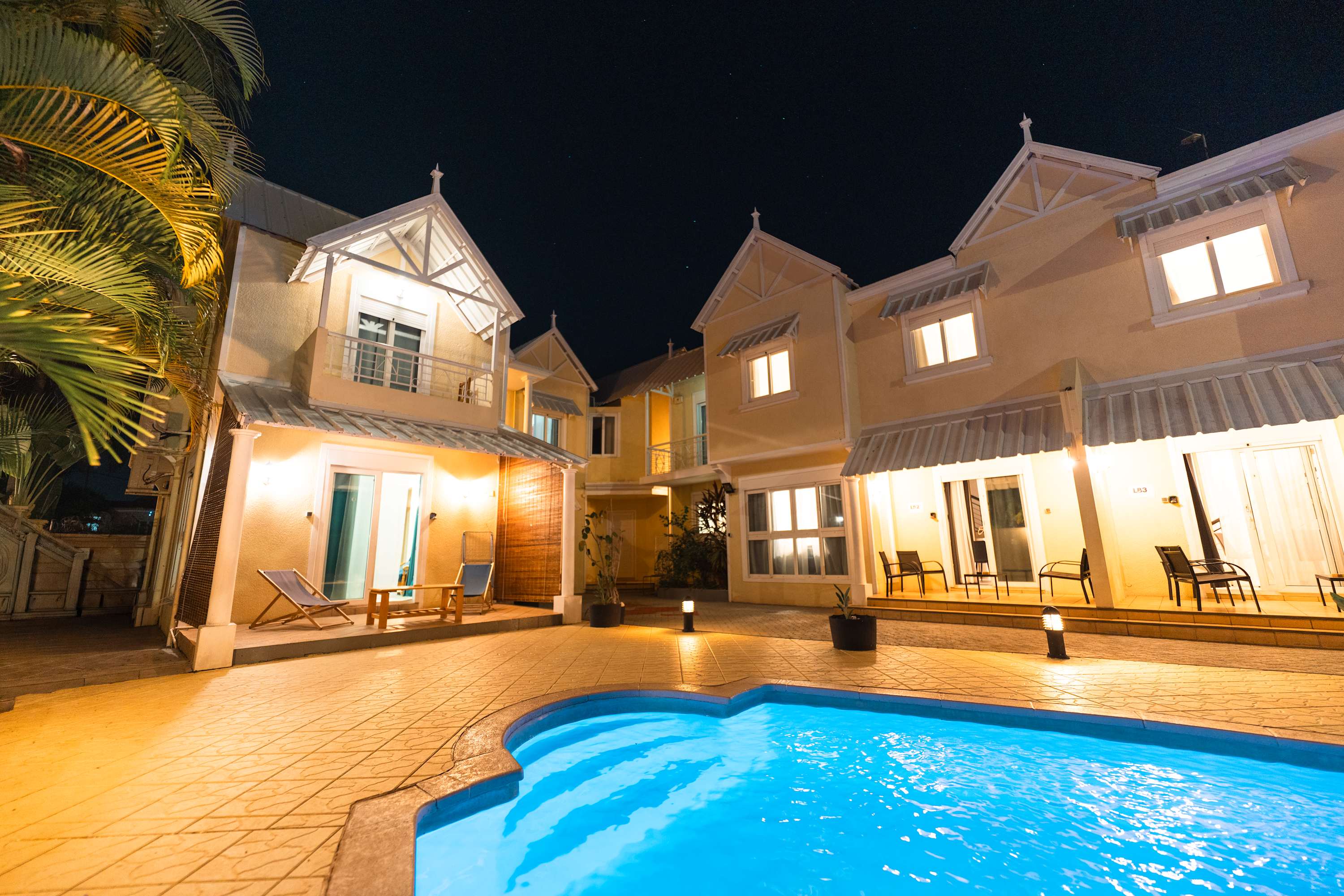
The villa is a standalone property, three to six bedrooms typically, with its own private pool, a garden, an outdoor dining area, and often a service room with a separate entrance. Villas suit families of four to six, groups of friends travelling together, and any stay where the residence is going to be a centre of gravity rather than a base camp. The minimum stay we ask for on a villa is five nights, because a villa starts to feel like home around night three and three nights is not long enough to use what you are paying for. Our flagship is the 3 villas complex with pool in Flic en Flac, which is three side-by-side villas around a shared central pool, sleeps up to eighteen, and is the property we book for weddings, milestone birthdays, and reunion weeks. Browse all of them at residences.
Choosing between the three is usually a function of party size and stay length. Two adults, one week: an apartment. Two adults, ten days, anniversary: a penthouse. Four adults, ten days: a villa or two adjacent apartments depending on the budget. Six adults plus kids: a villa, always. The cost-per-head on a villa beats the equivalent number of apartment nights once you cross five guests, and the shared pool, the shared kitchen, and the shared evenings are what people remember. If you are in the in-between zone, we will run the numbers both ways before you book.
Honeymoons. The west often wins for sunsets, lagoon access, and rooftop privacy. If you add a chef, boat, massage, or yoga session, choose and pay each provider directly after checking live terms, safety, insurance, access, and cancellation. Those services remain separate from the Friday residence booking. We go into the planning tradeoffs in our honeymoon guide.
Families with kids. The age of the kids is the deciding factor more than the size of the family. Under six. Flic en Flac. The lagoon is the calmest swim on the island, the residences have ground-floor terraces that you can keep eyes on from the kitchen, and the village is walkable for an afternoon ice cream. We have cots and high-chairs in every residence by default, and a few residences have a fenced pool with a child gate (ask us which). Six to twelve. Either coast works; we usually point toward Grand Baie because the activity volume (mini-train, mall cinema, water-park day trips, Casela World of Adventures, riding stables) is denser in the north. Teenagers. Grand Baie, almost always. There is something to do every evening within walking distance, the food choice is wider, and a teenager who can buy a smoothie at midnight on the seafront with their parents at the next table is a happy teenager. We go deeper in our families pillar, Mauritius with kids: the trips that actually work.
Groups and weddings. The west and the villa complex can suit a large group, subject to the current capacity, house rules, event restrictions, dated quote, and written booking confirmation. A booking request does not hold dates. Wedding planners, caterers, photographers, transport, and activities must be contracted and paid separately with the relevant providers after checking permissions, insurance, safety, noise, and cancellation terms.
When to come. Mauritius works year-round if you pick your coast right, but the months are not all the same. The dry season runs roughly May to mid-November, with the cooler months in June and July (still 21 to 25 Celsius, not cool by any northern-hemisphere measure) and the most reliable weather window from late September through early November. The wet season is December to mid-April, with warm rain that passes in an hour and a cyclone risk that runs from November 15 to May 15 per the Mauritius Meteorological Services. We go into the month-by-month detail in our guide, when to come to Mauritius. For most first-time visitors, October is the answer. For families on school holidays, August.
Budget and value. A Friday residence costs less than an equivalent five-star resort room and gives you more space, a kitchen, a washing machine, and a team that responds in minutes rather than via a guest-services hotline. The trade is that there is no buffet breakfast and no spa on site. Most guests prefer that trade after the first three days. Booking direct on friday.mu avoids the extra guest-service fees that OTAs can add on top, and keeps the whole stay with the same Friday team from enquiry to checkout. Direct guests also get 24/7 messaging in English, French, and Mauritian Creole, daylight-hours support during local hours (8am to 8pm), and a real human who has stood in the residence you are about to stay in. If you book through a third party, you get the residence but not the team-level concierge.
What I would actually compare. For a couple, start with the sea view penthouse with pool in Flic en Flac. For a family, compare the live catalogue for bedrooms, pool setup, kitchen, access, and walking distance. For a larger group, inspect the current villa-complex capacity and house rules. For remote work, compare verified Wi-Fi and workspace details. Use the dated quote for the actual stay price; book any chef, childcare, boat, massage, yoga, or driver separately with the provider.
The meta-takeaway. Mauritius rewards the trip you actually wanted, not the trip the brochures sell. If you are coming for the lagoon and the sunsets and the slow week, the west, almost certainly Flic en Flac, almost certainly an apartment or a penthouse depending on the budget. If you are coming for the dining and the activity and the volume of choice, the north, Grand Baie or Pereybère, almost certainly an apartment, with a villa option for the larger groups. If you are coming for the iconic photograph of a single white-sand crescent and you do not mind the wind on some afternoons, the east, and we will tell you which hotel to pick. We have written this guide because the question is the one we answer most often, and because we would rather you arrive at the residence that suits the trip than at the residence that sounded best in the listing.
Browse the whole catalogue at residences, or write to us at contact and tell us in two paragraphs what you are looking for. We read every message, we reply the same day in local hours, and we will tell you honestly if Friday is not the right fit for the trip you are describing. The best stays start with the first message getting the trip right, and we have built the team around the fifteen-minute call that gets it right.