The west or the north? Picking the right coast for the trip you want
Both coasts get sold as 'the best of Mauritius'. They're different islands. A short read on which suits which kind of week.
This is the short read. For a longer side-by-side comparison of the two largest west and north towns specifically (Flic en Flac vs Grand Baie), with residence picks, food recommendations, and a coast-by-coast itinerary, see Flic en Flac vs Grand Baie: which Mauritius coast for your trip?. Use that for trip planning; use this as the quick-read summary.
We get this question every week, and the way it is usually asked tells us the asker has read three travel pieces that mention both coasts in the same paragraph. That makes sense as marketing copy and almost no sense as actual planning. The west and the north of Mauritius are forty-five kilometres apart by road, and they feel like different countries. Picking the wrong one will not ruin your week, but it will give you a different week from the one you imagined.
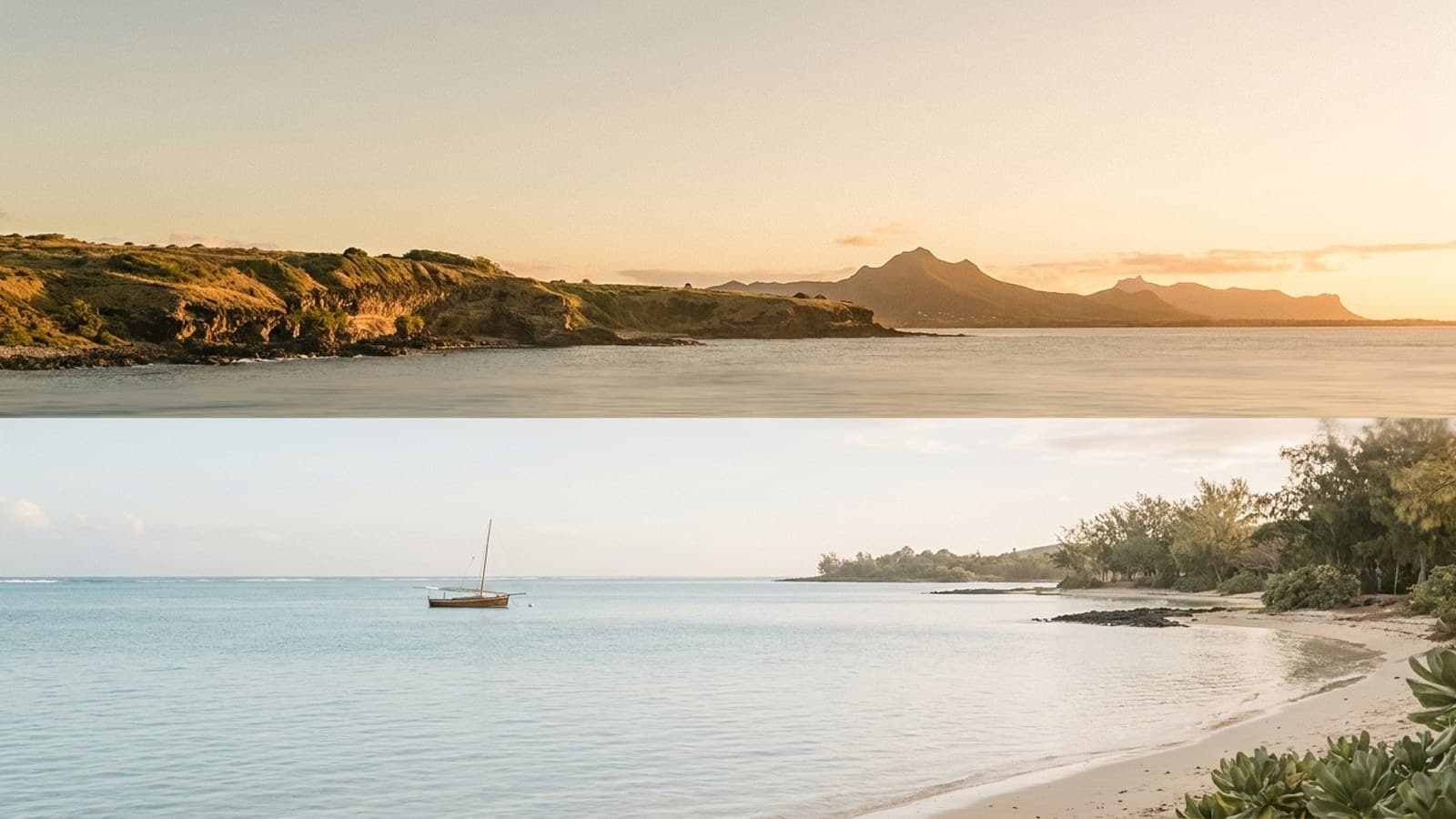
The west (Flic en Flac, Tamarin, Black River, Le Morne). Sunset coast. The sun drops into the lagoon, and from a deck on the right residence the light turns every late afternoon into a painting. Drier than the rest of the island, less humid, with more dramatic geography: this is where the volcanic mountains meet the lagoon, and the Black River Gorges National Park sits a thirty-minute drive from any residence we run on this coast. Surf at Tamarin (a forgiving beach-break for the third lesson) and at One Eye on the Le Morne reef (advanced only, no matter what the operator says). Kitesurf at Le Morne for most of the year, with the wind window strongest from June through October. Restaurants are scattered, mostly excellent, often family-run; you'll drive five to fifteen minutes to most dinners. Fewer tourists in absolute numbers, more domestic Mauritian families on weekends, and a quieter weekday mid-morning at the beach than you'd ever get in Grand Baie.
The north (Grand Baie, Pereybere, Cap Malheureux, Pointe aux Canonniers). The lagoon is the calmest on the island, and on a March afternoon the water is paddling-pool warm. Restaurant density is the highest in Mauritius (you can walk to dinner from most residences in Grand Baie, which is genuinely unusual on this island); the bar scene is lively in a small-town way that does not pretend to be Ibiza. The trip out to the northern islets (Île Plate, Gabriel, Coin de Mire) leaves from this coast, and it is one of the genuine highlights of any Mauritius week, particularly if you have older children who can swim properly. More tourists overall, but the noise distributes across a much larger restaurant and beach footprint, and the corners feel quiet quickly.
What the brochures rarely mention about the west. Sunset means the morning sun is behind you. Most of our west-coast residences face the lagoon, so the morning is shaded and the afternoon is open; if you are the kind of person who wants 7am sun on your face, the west is not it. Dinner is a car trip; if you don't drive and don't want to take an Uber every night, the west will feel further from the food than it actually is. The road that runs along the coast is the only road, and on a Friday evening in season it can take half an hour to do six kilometres.
What the brochures rarely mention about the north. The water is warmer in part because the lagoon is shallower and broader, which also means the snorkelling within walking distance of most beaches is gentler and less dramatic than the west. The trade winds that make Le Morne a kite paradise also make the north's east-facing beaches windier than they look in photos; pick a north-coast residence facing west or north-west if you want sunsets, not sunrises. Grand Baie's nightlife is fine if you are looking for it; if you are not, pick Pereybere or Cap Malheureux rather than the centre.
Which suits which trip. First-time couples chasing the postcard light: west, with at least one north day for the islets. Families with young kids who need a calm lagoon: north, end of story. Active travellers who want hikes and surf: west. Foodies who want to eat at twelve different places in seven days: north. Couples who want it quiet enough to actually unwind: west, with the right residence picked for distance from the coastal road. Multi-generational groups with grandparents: north, because the walking is shorter and the lagoon is friendlier on a 78-year-old's first snorkel.
An honest aside on the east. We don't operate on the east coast (Belle Mare, Trou d'Eau Douce). Not because it is bad, but because it is windier than the west and the north for most of the year, and the beaches are gorgeous but exposed. If your priority is the world's prettiest stretch of white sand and you are willing to negotiate wind, the east deserves a look; if your priority is a balcony where the wind isn't yanking the parasol out of your hand at 4pm, the west or the north is better.
The unromantic answer. Most weeks of seven nights or longer, we suggest splitting: four nights one coast, three the other, with the transit handled by us (one driver, the second residence pre-briefed, your fridge moved with you so you don't lose the half-bottle of Champagne and the cheese you bought on day two). It costs more in transit, around €60 to €90 for the move depending on the residences, but it doubles the sense of having actually been to Mauritius rather than to one bay in Mauritius. We don't push it on every booking; we suggest it when the dates and the group make sense for it.
A small loyalty. If we had to live one coast year-round, our team is split. Bryan is north and unmovable; Mathias is west and won't argue; Ishant alternates and has stopped pretending he has a favourite; Franny picks based on the season. The fact that all of us live where we work is the reason both coasts get the response time we promise. We hire local; we live local; we wouldn't recommend a coast we wouldn't sleep on ourselves.